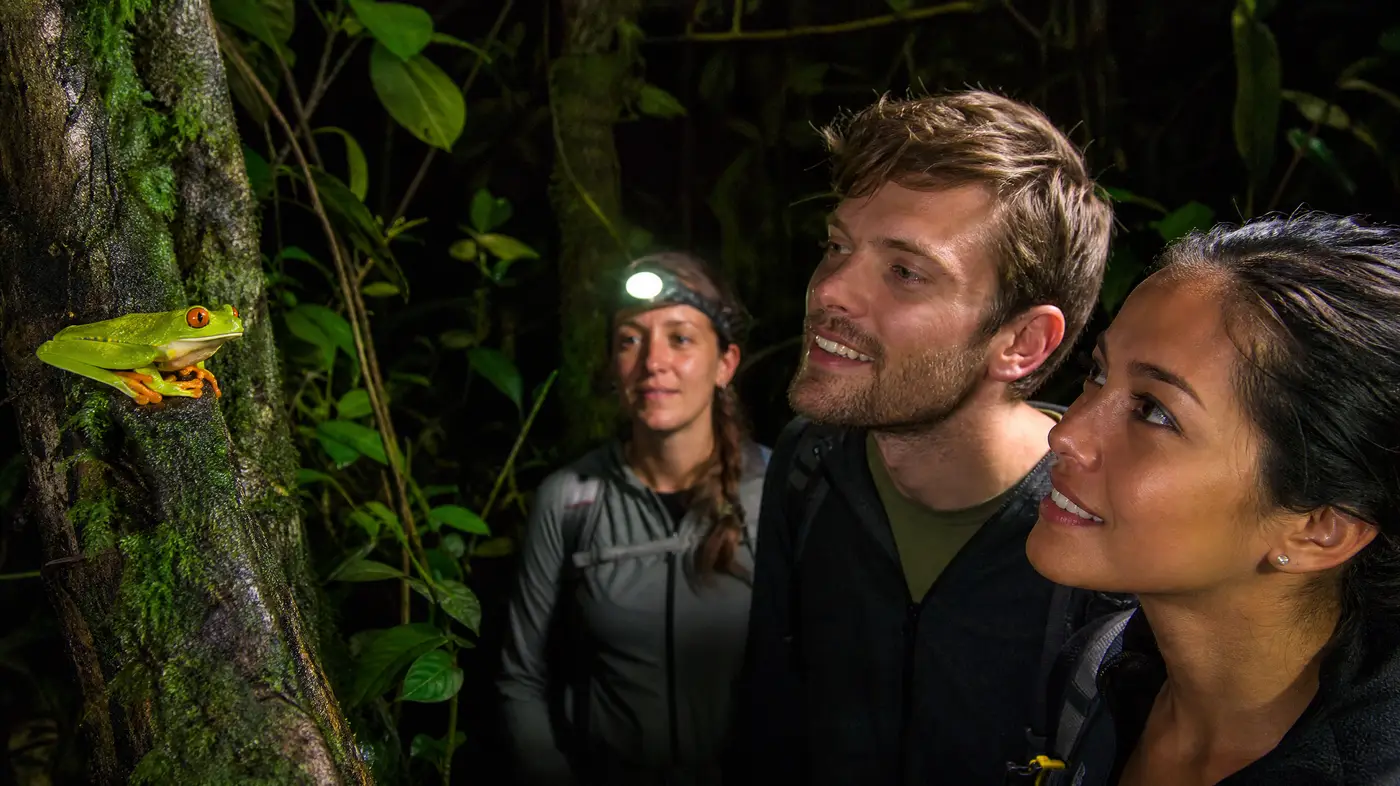
Monteverde Night Tour Animals: Wildlife and Frog Tours
At around 5:45 in the afternoon, the light fades fast over the Cordillera de Tilaran, and the cloud forest turns into an entirely different world. Day hikers clear out of the reserves, the temperature drops five or six degrees, and thousands of creatures wake up to hunt, mate, or simply avoid getting eaten. Finding real monteverde night tour animals is not like walking through a zoo, though. You are stepping into dense, damp secondary or primary growth with a narrow beam of LED light, relying heavily on the trained ears and eyes of a naturalist guide to spot whatever happens to be moving in the understory.
Most travelers arrive hoping for two things: a sloth hanging right over the path and a vibrant red-eyed tree frog posing on a broad leaf. Costa Rica does deliver those moments, but the reality of a night trek is messier, weirder, and far more interesting. On any given evening you might see a fist-sized tarantula backing into its dirt tunnel, a sleeping toucan puffed up into a neat feather ball, or a family of kinkajous crashing through the fig canopy thirty feet above your head. This guide breaks down what wildlife lives in these mountains after sunset, where the frogs congregate, and how to set realistic expectations for your evening in Monteverde.
Book your monteverde night tour experience:
What Monteverde Night Tour Animals You Actually Encounter
Mammals get top billing on most tour brochures, but they are also the most unpredictable. You have to remember that cloud forest mammals have vast territories and excellent hearing. Long before a group of eight tourists in rain jackets trudges down a gravel trail, many larger animals have already slipped into the thick brush. Still, certain species have become relatively accustomed to the gentle beam of headlamps along popular trails.
Kinkajous are easily the most common canopy mammals spotted after dark. Locals call them martillas, and while they look like a cross between a monkey and a small bear, they are actually related to raccoons. They spend their nights feeding on fruits, flower nectar, and insects high up in strangler figs. You will usually hear them before you see them. Branches shake violently, leaves rain down on your jacket, and when your guide aims a flashlight into the canopy, two bright orange-yellow eyes reflect right back. If you want a deeper look at trails where they gather frequently, check out our review of the Kinkajou night walk Monteverde.
Sloths exist in these forests, but seeing one on a night walk requires a bit of luck and sharp eyes. Monteverde is home to both two-toed and three-toed sloths, though two-toed sloths are strictly nocturnal and move around more after dusk. Even when active, their movement is agonizingly slow. A two-toed sloth might spend three hours descending from a high cecropia tree just to reach a lower branch filled with fresh shoots. Three-toed sloths, by contrast, are mostly diurnal, so when guides find them at night, they appear as gray-brown clumps high in the fork of a tree, dead asleep.
Down on the ground, other mammals make regular appearances:
- Nine-banded armadillos: noisy foragers that root through the leaf litter like tiny bulldozers, barely bothered by passing humans.
- Orange-bellied agoutis: usually diurnal rodents, though you often catch them scurrying back to their burrows right around twilight.
- White-nosed coatis: solitary males sometimes wander the forest floor at dusk looking for fallen fruits, insects, and small lizards.
- Opossums: specifically the common opossum and the four-eyed opossum, often seen scurrying along horizontal vines near creek beds.
I once watched a four-eyed opossum balance on a vine barely thicker than my thumb, snatch a beetle off the underside of a leaf, and vanish into the ferns within ten seconds. It was over before half the group even got their flashlights pointed in the right direction. That is just how a monteverde night wildlife tour works.
The Amphibian World: Night Frog Tour Monteverde Encounters
If you want guaranteed wildlife encounters, look to the amphibians. Frogs are the true rockstars of the night forest, and their presence changes drastically depending on moisture. During the wet months between May and November, the chorus along forest streams is almost deafening. In the drier months from January through April, they hunker down near permanent springs and muddy hollows, making them slightly harder to locate without expert help.
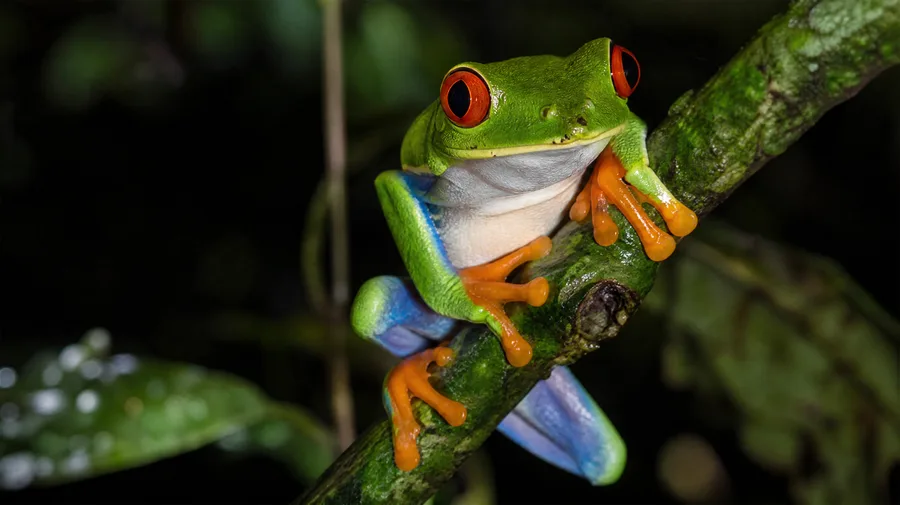
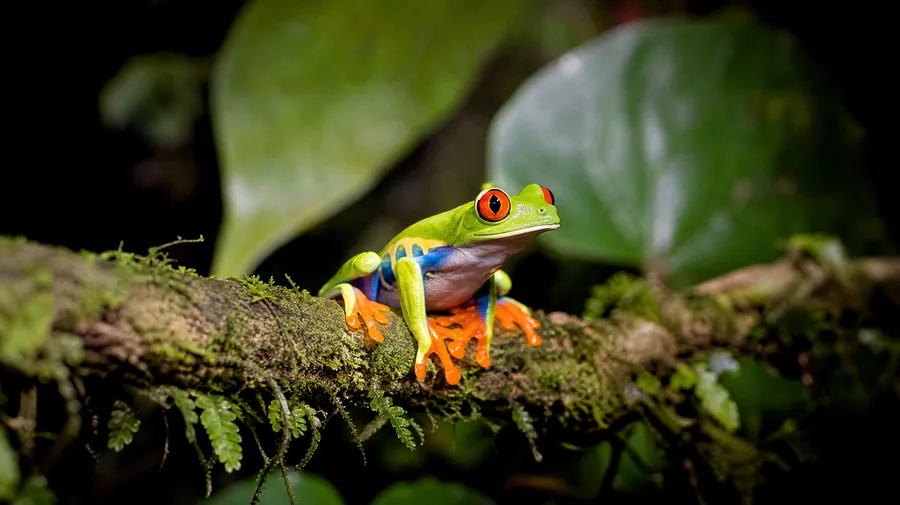
A focused night frog tour monteverde experience will expose you to an astonishing variety of shapes and sizes. The most iconic species is the red-eyed tree frog (Agalychnis callidryas). Seeing one in person feels surreal. During the day, they tuck their bright blue flanks and orange webbed feet completely under their bodies, blending into green foliage. At night, they open their bulging crimson eyes and crawl deliberately along heliconia leaves. They are smaller than most people expect, usually about two to three inches long.
Pro tip: If you take a dedicated frog walk, ask your guide to inspect the undersides of leaves near running water using a backlit flashlight to reveal translucent glass frogs.
Glass frogs are another Monteverde specialty, especially around clean mountain streams. Their skin underneath is completely transparent, allowing you to see their beating heart and digestive tract with a strong flashlight held behind them. Finding them takes real skill because they sit motionless on the undersides of wet leaves, usually perched directly over rushing water so their hatched tadpoles can drop straight into the stream.
You will also encounter common rain frogs, mask frogs, and the tiny dink frog. The dink frog (Diasporus diastema) makes a sharp, metallic "tink" sound that echoes across the forest like a tiny hammer striking an anvil. Tourists constantly mistake the noise for an electronic gate or a malfunctioning trail sensor. The frog making that piercing sound is barely the size of a fingernail.
Some visitors opt for a manicured monteverde frog pond night tour rather than a wild trail walk. The frog pond facilities feature enclosed and semi-enclosed habitats where water levels and plants are maintained year-round. It is an easier, paved walk, ideal for families with young kids or travelers with mobility concerns who want guaranteed frog sightings without slipping on muddy forest roots. For sheer atmosphere, though, finding a wild mask frog clinging to a mossy branch in an open reserve wins hands down.
Sleeping Birds, Reptiles, and Creepy-Crawlies
Bird watching at night sounds backward, but sleeping birds make for some of the best sightings on a monteverde night walk wildlife route. During the day, cloud forest birds dart through the canopy at breakneck speeds, making binoculars essential. At night, they roost on low, thin branches, completely exposed to flashlights.
Guides look for what they call "feather tennis balls." Toucanets, motmots, and various tanagers fluff their plumage out to stay warm in the damp mountain air, tucking their heads completely under their wings. A blue-crowned motmot sleeping on an eye-level branch lets you get within four feet without flinching. They sleep on precarious, spindly twigs on purpose - if a snake or rodent tries to crawl toward them, the branch shakes and wakes them up before the predator can strike.
Note: Flash photography is strictly prohibited on almost all Monteverde night walks because bright strobes disorient sleeping birds and night-adapted mammals.
Speaking of reptiles, snakes are out there, even if sightings are not nightly occurrences. The side-striped palm pit viper is the most common venomous snake found on higher elevation trails. They are ambush hunters, lime green with yellow side stripes, and they spend hours coiled around stems waiting for frogs or katydids. You might also spot harmless snail-eating snakes, vine snakes, or an occasional coffee snake hunting through the leaf litter.
Invertebrates make up the bulk of the biomass here, and they are fascinating once you get past the initial cringe factor. Clay embankments along the trails are riddled with quarter-sized holes. Shine a light inside, and you will almost certainly see the hairy legs of a Monteverde orange-kneed tarantula. Guides often hold a dry leaf near the entrance, gently rustling it to draw the spider out. You will also see giant millipedes curled into tight defensive spirals, bullet ants foraging on tree trunks, and stick insects so well camouflaged they look identical to lichen-crusted bark.
Book your monteverde night tour experience:
Comparing Sighting Odds on Monteverde Night Wildlife Walks
Different reserves offer different microclimates and trail networks. Lower elevation refuges like El Refugio or Valle Escondido tend to be slightly warmer and hold more active insects, frogs, and reptiles, while the higher reserves feature thick cloud cover, bromeliad-heavy canopies, and better odds for canopy mammals like kinkajous.
Here is a breakdown of what you are realistic about seeing on a typical two-hour guided walk:
| Wildlife Group | Representative Species | Sighting Probability | Where to Look |
|---|---|---|---|
| Canopy Mammals | Kinkajou, Two-toed Sloth | Moderate (60-70%) | Fruiting trees, high canopy vines |
| Ground Mammals | Armadillo, Agouti, Opossum | Low to Moderate (40%) | Trail edges, leaf litter, root hollows |
| Amphibians | Red-eyed Tree Frog, Glass Frog | High (85-95%) | Ponds, drainage streams, heliconia leaves |
| Roosting Birds | Emerald Toucanet, Motmots | High (80-90%) | Eye-level horizontal branches |
| Reptiles | Side-striped Palm Viper, Anoles | Low to Moderate (35-50%) | Low shrubs, mossy branches, tree trunks |
| Arachnids & Insects | Tarantula, Stick Bug, Katydid | Very High (95%+) | Clay trail banks, broad leaves, tree trunks |
Conditions change nightly. A heavy, wind-driven downpour will push birds and mammals deeper into cover, but it will bring hundreds of frogs out to mate. A bone-dry evening in March might make walking easier, but amphibians will be much harder to spot outside of wet ravines.
How Guides Spot Wildlife in the Dark
When you walk behind a skilled naturalist guide, it feels like magic. They will stop abruptly, sweep their flashlight across twenty feet of tangled vines, and pinpoint a two-inch sleeping lizard you walked right past. It is not magic, though - it is pattern recognition and sensory training developed over hundreds of nights on the same dirt paths.
Guides rely on distinct sensory cues that average travelers simply miss:
- Eye shine: Spiders, mammals, and nightjars have a reflective layer behind their retinas called the tapetum lucidum. Holding a flashlight at eye level reveals pinpricks of green, red, or silver light.
- Sound cues: Snapping branches signal kinkajous overhead, while subtle, rhythmic rustles in the mulch usually mean an armadillo digging for grubs.
- Leaf silhouettes: Guides look for irregularities on smooth plant surfaces. A small lump on the edge of an anthurium leaf is almost always a resting tree frog.
- Scent markers: Certain forest residents leave telltale smells. Passing a family of collared peccaries leaves a pungent, musky aroma hanging in the cold air for several minutes.
You can help your own chances immensely by learning how to search. Most people keep their light pointed directly at their own boots so they do not trip. That makes sense, but you miss everything above waist level. Keep one eye on where you step, then periodically sweep your beam slowly across branches between four and eight feet high. If you want to know what to pack and wear so you are not miserable out there in the rain, read our guide on Monteverde night walk tips and gear before heading out.
Keep your voice down to a quiet whisper. Animals in these reserves are used to low murmurs, but sharp laughter, heavy footsteps, and clicking trekking poles will send forest creatures scrambling into deep cover long before you arrive.
Frequently Asked Questions about monteverde night tour animals
Are sloths guaranteed on a Monteverde night tour?
No animal is guaranteed in the wild. While sloths live throughout the reserves, they spend most of their time tucked high up in dense foliage. You have roughly a 50 to 60 percent chance of spotting one on any given night walk, usually a two-toed sloth moving through the branches.
What is the difference between a wild night walk and a frog pond tour?
A wild night walk takes place in open nature reserves where wildlife moves freely across hundreds of acres, meaning sightings vary every night. A frog pond tour happens inside dedicated gardens or semi-contained habitats designed to showcase dozens of frog species in a small, accessible area with paved paths.
Are the snakes seen on night walks dangerous?
Some snakes, like the side-striped palm pit viper, are venomous, but they pose virtually zero threat to visitors on guided tours. Guides stay on marked paths, carry powerful lights, and keep groups at a safe distance of several feet. As long as you stay on the path and refrain from touching branches, there is no real danger.
What is the best month to see frogs in Monteverde?
The wet season from May to November provides the highest frog activity because ponds and streams are full, triggering breeding cycles. However, even in the dry season (January to April), guides can reliably find frogs near permanent water sources and secluded creeks.
Quick Reference
- Flash photography is banned on guided forest trails
- Best frog viewing runs May through November
- Kinkajous are the most common canopy mammals spotted
- Tours run around 2 hours, starting at dusk
Book your monteverde night tour experience:
My Take
Walking the cloud forest after sunset is one of those travel experiences that cuts through the routine tourist noise. Do not go into the woods treating it like a scavenger hunt where you need to check off five mammals and three reptiles to get your money's worth. Some nights the canopy is quiet and you spend forty minutes marveling at a glass frog whose heart is beating right through its belly. Other nights, kinkajous put on an acrobatic show directly above your head while an armadillo roots around your boots. Dress warmly, carry a decent light, listen to your guide, and let the cloud forest surprise you with whatever happens to be awake.
Read more about monteverde night tour.